
What if there was a way to deliver powerful chemotherapy directly to cancer cells — while keeping the rest of your body safe from its effects?
For patients whose cancer has spread within the abdominal cavity, this is no longer just a possibility. HIPEC — Hyperthermic Intraperitoneal Chemotherapy — is a groundbreaking surgical procedure that combines cancer surgery with heated chemotherapy delivered directly inside the abdomen. It targets cancer at its source, with precision that traditional chemotherapy simply cannot match.
Dr. Manoj Dongare is one of the best cancer surgeons in Pune with 17 years of experience in surgical oncology. He practices at Cloverleaf Speciality Clinic, Wakad, Pune and Dr. D. Y. Patil Medical College, Hospital & Research Centre, Pimpri, Pune. He is among the very few surgeons in Maharashtra who perform HIPEC surgery for advanced abdominal cancers.
If you or your loved one has been diagnosed with cancer that has spread inside the abdomen, HIPEC surgery may be the treatment option that changes everything.
What is HIPEC Surgery?
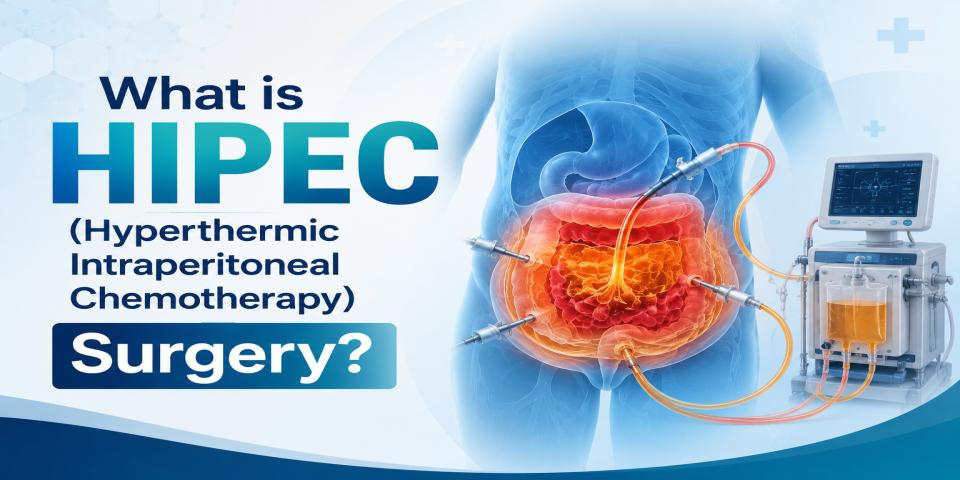
HIPEC’s full form is Hyperthermic Intraperitoneal Chemotherapy.
It is an advanced cancer treatment that combines two powerful steps. First, the surgeon removes all visible cancer tumours from inside the abdomen through a procedure called Cytoreductive Surgery. Second, heated chemotherapy drugs are circulated directly inside the abdominal cavity to destroy any remaining microscopic cancer cells.
This is not regular chemotherapy given through a vein. This is abdominal chemotherapy delivered directly to the cancer site. It is more powerful, more targeted, and more effective for cancers that have spread inside the belly.
HIPEC medical abbreviation stands for:
H — Hyperthermic (heated) I — Intraperitoneal (inside the abdominal cavity) P — Perfusion (circulation of fluid) E — Chemotherapy (cancer killing drugs) C — Surgery (the complete procedure)
What is the Peritoneum?
The peritoneum is a thin membrane that lines the inside of the abdomen. It covers all the major abdominal organs, including the stomach, liver, intestines, and ovaries.
When cancer spreads to this lining, it is called peritoneal carcinomatosis. This condition is very difficult to treat with regular intravenous chemotherapy because the drugs cannot reach the peritoneum in high enough amounts through the bloodstream.
HIPEC solves this problem. It delivers chemotherapy drugs directly inside the abdominal cavity at the exact location where the cancer has spread.
Which Cancers Are Treated With HIPEC Surgery?
Best HIPEC surgery in Pune is recommended for the following cancers:
- Colorectal cancer with peritoneal spread
- Ovarian cancer
- Stomach cancer with peritoneal metastasis
- Appendix cancer and pseudomyxoma peritonei
- Mesothelioma
- Gallbladder cancer with peritoneal spread
- Primary peritoneal cancer
- Small bowel cancer with abdominal spread
If your cancer has spread inside the abdomen but has not reached distant organs like the lungs or brain, you may be eligible for this abdominal operation.
How Does HIPEC Surgery Work?
HIPEC surgery is done in two main steps inside the operating theatre.
- Step — Cytoreductive Surgery (CRS): The surgeon carefully removes all visible cancer tumours from the peritoneum and abdominal organs. This step is also called debulking surgery. The goal is to remove every tumour that can be seen with the naked eye. This step alone can take 3 to 6 hours, depending on how much cancer is present.
- Step — HIPEC (Heated Chemotherapy): Once all visible tumours are removed, heated chemotherapy drugs at 41 to 43 degrees Celsius are circulated inside the closed abdominal cavity for 60 to 90 minutes. The heat makes the chemotherapy drugs work much better. After circulation is complete, the drugs are drained out. The abdomen is washed and then closed with sutures.
The entire procedure for cancer surgery takes 6 to 12 hours in total.
Why is Heated Chemotherapy More Effective?
There are three strong scientific reasons why heated chemotherapy works better than regular chemotherapy for abdominal cancers.
- First Reason: Heat increases the penetration of chemotherapy drugs deep into cancer cells. Normal cancer cells cannot tolerate high heat as well as healthy cells.
- Second Reason: Direct delivery inside the abdomen means the drug concentration at the cancer site is 20 to 30 times higher than what is possible through a vein. This is far more powerful than standard intravenous chemotherapy.
- Third Reason: Because the drugs are delivered directly inside the abdomen and then drained out, the rest of the body is exposed to much less chemotherapy. This means fewer side effects on the kidneys, liver, and immune system compared to regular chemotherapy cycles.
Who is Eligible for HIPEC Surgery?
Not every patient is suitable for HIPEC surgery. The following criteria are evaluated before recommending this treatment for cancer surgery.
Patient is eligible if:
- Cancer is limited to the peritoneum and has not spread to the lungs, brain, or bones
- Peritoneal Cancer Index score is within an acceptable surgical range
- The patient is physically fit for a major and lengthy surgical procedure
- No serious heart, kidney, or lung conditions that prevent surgery
- The patient has not had multiple previous abdominal surgeries, causing heavy scarring
Patient may not be eligible if:
- Cancer has spread to multiple distant organs
- Patient is too weak or elderly to tolerate major surgery
- Liver function or kidney function is severely compromised
A complete evaluation by a multidisciplinary team, including a surgical oncologist, medical oncologist, radiologist, and anaesthesiologist, is done before making the final decision.
Benefits of HIPEC Surgery:
HIPEC surgery offers several important advantages for patients with advanced abdominal cancers.
- Targets cancer directly at the source inside the abdomen
- Drug concentration at the cancer site is 20 to 30 times higher than that of intravenous chemotherapy
- Combines surgery and chemotherapy into one single procedure, saving the patient from multiple hospital admissions
- Significantly improves overall survival in eligible patients with peritoneal cancers
- Fewer body-wide side effects compared to standard chemotherapy cycles
- Gives genuine hope to patients who have been told that their cancer is inoperable
- Treats microscopic cancer cells that are invisible to the surgeon’s eye during cytoreductive surgery
Risks of HIPEC Surgery:
HIPEC surgery is a major procedure and carries certain risks. Patients must be fully informed before making a decision.
- Surgery duration is long, ranging from 6 to 12 hours
- Risk of infection, bleeding, and anastomotic leak at reconnection points
- Temporary stress on the kidneys due to chemotherapy drugs
- A long ICU stay of 2 to 5 days is required after surgery
- Overall hospital stay of 10 to 14 days
- Risk of blood clots during or after surgery
- Fatigue and weakness during the recovery period
The best doctor for HIPEC surgery in Pune ensures that all these risks are minimised through careful pre-surgical planning, an experienced surgical team, and close post-operative monitoring.
What to Expect After HIPEC Surgery?
Recovery after HIPEC surgery happens in stages. Here is what patients can expect.
- Day 1 to 3: Patient is in ICU with close monitoring of vital signs, kidney function, and wound healing. Pain is managed with medicines.
- Day 3 to 5: Patient is shifted from the ICU to the ward. Light walking begins. The liquid diet is started slowly.
- Day 5 to 10: Soft food is introduced gradually. Wound dressing is done regularly. Physiotherapy begins.
- Days 10 to 14: Most patients are discharged from the hospital with full instructions for home care and follow-up.
- Week 3 to 6: Gradual return to normal daily activities. Energy improves steadily.
- Weeks 6 to 8: Most patients achieve full recovery. Regular oncology follow-up begins to monitor cancer response.
HIPEC Surgery Cost in Pune:
The cost of HIPEC surgery in Pune depends on several factors, including the type of cancer, extent of peritoneal spread, duration of surgery, ICU stay required, and medicines used during and after the procedure.
Patients who are eligible for government health schemes can avail HIPEC surgery at minimum cost under the Mahatma Phule Jan Arogya Yojana (MJPJAY) and Pradhan Mantri Jan Arogya Yojana (PMJAY) schemes at D.Y. Patil Hospital, Pimpri-Chinchwad.
Dr. Manoj Dongare’s team helps eligible patients with complete documentation and enrollment so that financial concerns do not delay treatment.
Why Choose Dr. Manoj Dongare for HIPEC Surgery in Pune?
Dr. Manoj Dongare is one of the best cancer specialists in Pune with deep expertise in complex abdominal cancer surgeries including HIPEC and Cytoreductive Surgery.
Here is why patients trust Dr. Manoj Dongare for HIPEC surgery:
- 17 years of specialised experience in surgical oncology and HPB surgery
- Performed over 2000 cancer surgeries across Maharashtra
- Practices at Cloverleaf Speciality Clinic, Wakad, and D.Y. Patil Hospital, Pimpri-Chinchwad, Pune
- Accepts patients under MJPJAY, CGHS, and ECHS government health schemes
- Trusted by patients from Pune, Mumbai, Nashik, Nagpur, and rural Maharashtra
To consult the best surgeon in Pune for HIPEC surgery, call 09881379573 or book an appointment online.
Conclusion:
HIPEC surgery has changed the way advanced abdominal cancers are treated in India. It gives genuine hope to patients who were once told that their cancer had no surgical solution.
If you or your loved one has been diagnosed with peritoneal cancer or abdominal cancer spread, do not lose hope. Do not delay. The earlier the evaluation, the better the outcome.
Consult Dr. Manoj Dongare at Cloverleaf Speciality Clinic, Wakad, or Dr. D. Y. Patil Medical College, Hospital & Research Centre, Pimpri, Pune
Call 09881379573 and book your consultation today.
Frequently Asked Questions About HIPEC Surgery:
The success rate of HIPEC surgery depends on the type and stage of cancer. For eligible patients with colorectal or ovarian cancer limited to the peritoneum, studies show that HIPEC significantly improves survival rates compared to chemotherapy alone. In many cases overall survival doubles. Early evaluation gives the best results.
HIPEC surgery is a major operation and some pain is expected after the procedure. However pain is well managed with medicines during the ICU and hospital stay. Most patients report that pain reduces significantly after the first 3 to 5 days. By the time of discharge pain is usually mild and manageable with oral medicines.
HIPEC surgery typically takes 6 to 12 hours in total. This includes cytoreductive surgery to remove all visible tumours followed by 60 to 90 minutes of heated chemotherapy circulation inside the abdomen. The duration varies based on how much cancer is present and which organs are involved.
HIPEC full form is Hyperthermic Intraperitoneal Chemotherapy. It is an advanced cancer treatment that combines surgical tumour removal with heated chemotherapy delivered directly inside the abdominal cavity to destroy remaining cancer cells after surgery.