
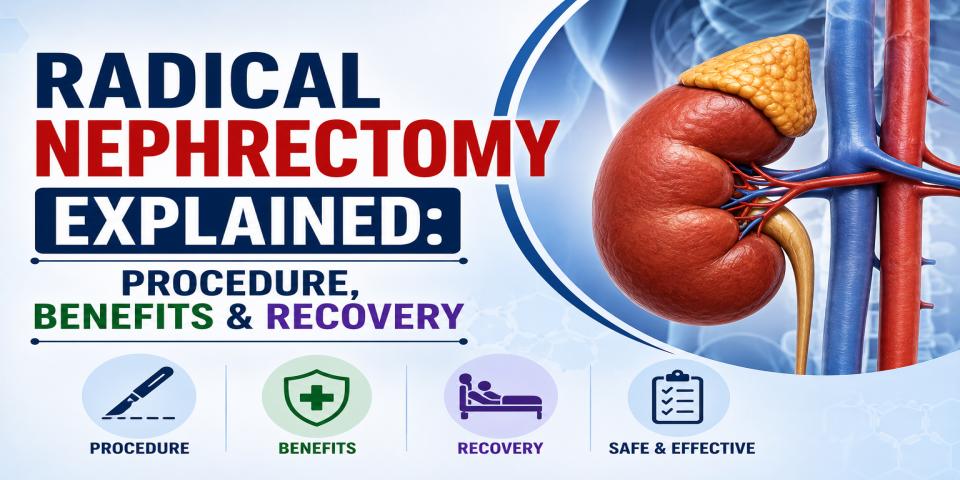
Facing a diagnosis of a kidney tumour can be a life-altering event. However, with modern surgical advancements, even complex kidney cancers are highly treatable. Dr. Manoj Dongare, a leading Best Oncologist and Kidney Cancer Surgeon with 17 years of experience, specializes in advanced procedures like Radical Nephrectomy. As a top Cancer Surgeon affiliated with the Best Cancer Hospital in Pune and consulting at Cloverleaf Speciality Clinic, he ensures patients receive world-class care. This guide provides a detailed look at the procedure, what it entails, and how to navigate the recovery journey.
Introduction:
When a tumor affects the kidney, surgery is often the most effective way to ensure the cancer is completely removed. Radical Nephrectomy is a gold-standard surgical procedure used to treat localized kidney cancer. Whether performed through traditional methods or advanced Robotic Onco Surgeon techniques, the goal remains the same: to remove the diseased kidney and safeguard the patient’s long-term health.
What Is Radical Nephrectomy?
To understand this procedure, we must first look at the meaning of nephrectomy meaning. A nephrectomy is the surgical removal of a kidney. There are two main nephrectomy types:
- Partial Nephrectomy: Also known as part kidney removal, where only the tumor and a small margin of healthy tissue are taken out.
- Radical Nephrectomy: This radical surgery involves the removal of the entire kidney, the surrounding fat, and the adrenal gland (in some cases), along with the nearby lymph nodes.
Radical nephrectomy means a complete clearance of the kidney and its protective layers to ensure no cancer cells are left behind.
When Is Radical Nephrectomy Needed?
This surgery is primarily recommended for:
- Large Kidney Tumors: When the tumor is too large for a partial nephrectomy.
- Centrally Located Tumors: If the tumor is near major blood vessels or the centre of the kidney.
- Renal Cell Carcinoma (RCC): The most common form of kidney cancer.
- Upper Urinary Tract Cancer: In cases requiring a radical nephroureterectomy (removal of the kidney and the ureter).
Step-by-Step Procedure of Radical Nephrectomy:
The nephrectomy surgery is a precise process that requires extreme surgical skill. Here is how Dr. Manoj Dongare typically performs the procedure:
- Anesthesia: The patient is placed under general anaesthesia, ensuring they are asleep and pain-free throughout the tumor surgery removal.
- Incision Placement: Depending on the technique, a nephrectomy incision is made. For open surgery, this is usually on the side (flank) or the abdomen. For lap nephrectomy, several small “keyholes” are used.
- Vessel Ligation: The surgeon carefully identifies the renal artery and renal vein (the main blood vessels to the kidney). These are securely tied off and cut to prevent bleeding.
- Ureter Dissection: The ureter (the tube carrying urine to the bladder) is identified, clamped, and divided.
- Organ Removal: The entire kidney, encased in its fatty layer (Gerota’s fascia), is removed. If the tumor is in the upper part, the adrenal gland may also be removed.
- Lymph Node Clearance: Nearby lymph nodes are checked and removed if there is a suspicion of cancer spread.
- Closure: The surgeon checks for any bleeding, ensures the area is clean, and closes the incision for nephrectomy using sutures or staples.
Types of Radical Nephrectomy Techniques:
- Open Radical Nephrectomy: The traditional method uses a single large incision. It is often used for very large or complex tumors.
- Lap Nephrectomy (Laparoscopic): A minimally invasive approach using a camera and small tools. It results in less pain and a faster recovery.
- Robotic-Assisted Nephrectomy: Performed by a Robotic Onco Surgeon, providing 3D visualization and superior precision for complex radical surgery.
Benefits of Radical Nephrectomy:
Choosing this path under the guidance of the best oncologist offers several clinical advantages:
- Complete Cancer Clearance: It offers the highest probability of removing the entire tumor, especially in aggressive or large cancers.
- Prevention of Recurrence: By removing the surrounding fat and lymph nodes, the risk of the cancer coming back in that area is significantly reduced.
- Definitive Staging: Removing the entire organ allows pathologists to provide an accurate stage and grade of the cancer, which determines if further treatment is needed.
- Improved Long-term Survival: For localized kidney cancer, this procedure has excellent long-term survival rates.
- Suitability for Complex Cases: It remains the safest option for tumors that have invaded the renal vein or are centrally located.
Risks and Possible Complications:
While generally safe, nephrectomy complications can include:
- Bleeding: The kidney is highly vascular, so blood loss is a potential risk.
- Infection: Risk at the site of the nephrectomy incision.
- Injury to Nearby Organs: Such as the spleen, liver, or intestines.
- Kidney Function Decline: The remaining kidney must work harder, which can be a concern for patients with existing kidney disease.
Recovery After Radical Nephrectomy:
Recovery is a phased process that requires patience and follow-up care:
- Immediate Post-Op (Hospital): You will stay in the hospital for 3 to 5 days. You will have a catheter to drain urine and may have a drain near the incision site.
- Pain Management: You will receive medications to manage discomfort. Lap nephrectomy patients typically require less pain medication.
- Early Mobility: Nurses will encourage you to sit up and walk within 24 hours to prevent blood clots and pneumonia.
- Wound Care: The medical team will monitor your incision for nephrectomy for signs of healing.
- Home Recovery: Once home, you should avoid heavy lifting for 6 to 8 weeks. Most people return to light desk work within 3 to 4 weeks.
Life After Kidney Tumor Surgery Removal:
Most people can lead a perfectly normal, healthy life with just one kidney. The remaining kidney naturally enlarges and takes over the function of both. To protect your remaining kidney, you should:
- Monitor blood pressure regularly.
- Stay well-hydrated.
- Avoid excessive use of painkillers (NSAIDs) like ibuprofen, which can strain the kidneys.
When to Consult Dr. Manoj Dongare for Radical Nephrectomy in Pune?
If you have been diagnosed with a renal mass or are experiencing symptoms like blood in the urine or persistent side pain, expert consultation is vital. Dr. Manoj Dongare provides high-end Cancer Treatment under Government Schemes, ensuring that financial constraints do not stand in the way of life-saving surgery.
He facilitates treatment under schemes such as:
- Mahatma Jyotiba Phule Jan Arogya Yojana (MJPJAY)
- Central Government Health Scheme (CGHS)
- Ex-Servicemen Contributory Health Scheme (ECHS)
For an honest second opinion or to plan your nephrectomy surgery, you can visit him at Cloverleaf Speciality Clinic, known for its patient-centric approach in the PCMC area.
Conclusion:
A Radical Nephrectomy is a powerful surgical tool in the fight against kidney cancer. By choosing a skilled Cancer Surgeon and the Best Cancer Hospital in Pune, you ensure that you receive the most advanced surgical care available. While the thought of losing a kidney is daunting, the body’s ability to adapt is remarkable, allowing most patients to live a long, cancer-free life.
FAQs:
नेफ्रेक्टोमी (Nephrectomy) का अर्थ है सर्जरी के माध्यम से गुर्दे (Kidney) को निकालना।
A total nephrectomy simply means removing the whole kidney. A radical nephrectomy goes further by removing the kidney, the surrounding fat, the adrenal gland, and nearby lymph nodes to treat cancer.
It is indicated for large kidney tumors, tumors that have invaded the renal vein, or when a partial nephrectomy is not technically possible due to the tumor’s location.
A standard nephrectomy might be done for a non-cancerous reason (like a non-functioning kidney). A radical nephrectomy is specifically an oncological procedure designed to remove all potentially cancerous tissue around the kidney.
For laparoscopic or robotic surgery, recovery is about 3-4 weeks. For open surgery, it may take 6-8 weeks for full recovery.
Common risks include bleeding, infection at the nephrectomy incision, and a temporary or permanent decrease in overall kidney function.