
Best Pancreatic Cancer Specialist in Pune – Dr. Manoj Dongare
Pancreatic cancer is one of the most complex cancers to treat. But with the right surgeon and the right hospital, outcomes can be significantly better.
Dr. Manoj Dongare is one of the best cancer surgeons in Pune with over 17 years of specialised experience in pancreatic cancer surgery, liver transplantation, and surgical oncology. He has performed over 600 pancreatic resections including complex portal vein resections and post chemoradiation cases. He practices at D.Y. Patil Hospital and Research Centre, Pimpri-Chinchwad, and Cloverleaf Speciality Clinic, Wakad, Pune.
If you or your loved one has been diagnosed with pancreatic cancer, do not delay. Early evaluation by an experienced pancreatic cancer surgeon in Pune can make a critical difference to treatment outcome.
What is the pancreas?
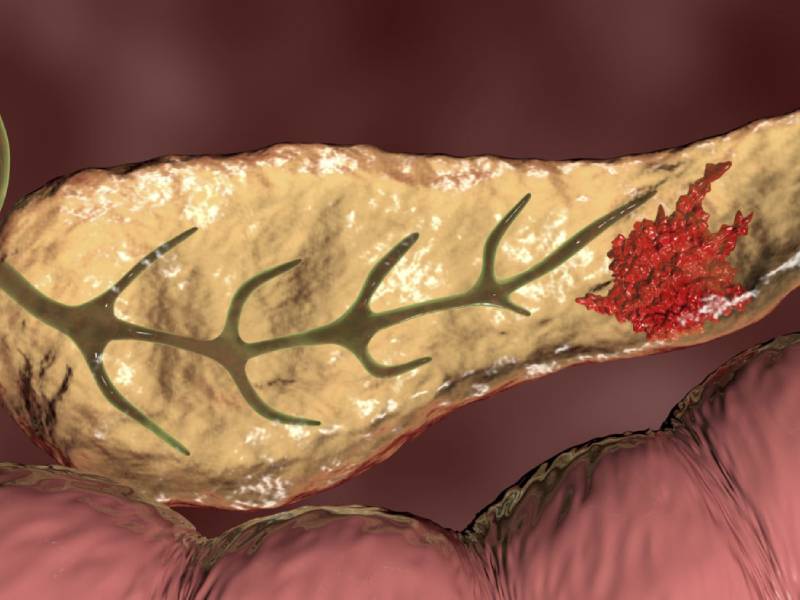
The pancreas is an organ located in the abdomen. It plays an essential role in converting the food we eat into fuel for the body’s cells. The pancreas has two main functions: an exocrine function that helps in digestion and an endocrine function that regulates blood sugar.
What is pancreatic cancer?
Pancreatic cancer occurs when changes (mutations) in the pancreas cells lead them to multiply out of control. A mass of tissue can result. Sometimes, this mass is benign (not cancerous). In pancreatic cancer, however, the mass is malignant (cancerous). Dr. Manoj Dongare provides the best Pancreatic Cancer Treatment in Pune. He is the best cancer specialist in Pune.
Patient feedback for Surgical for Pancreatic Cancer:
Types of Pancreatic Cancer:
Not all pancreatic cancers are the same. Understanding the type helps the surgeon plan the most effective treatment.
Exocrine Tumours – Most Common Type
About 95 percent of all pancreatic cancers are exocrine tumours. The most common type is Pancreatic Ductal Adenocarcinoma (PDAC). It starts in the cells that line the pancreatic ducts. It is aggressive and requires early surgical intervention for best results.
Other exocrine tumours include:
- Acinar cell carcinoma
- Intraductal papillary mucinous neoplasm (IPMN)
- Mucinous cystic neoplasm
Endocrine Tumours – Neuroendocrine Tumours (NETs)
Pancreatic Neuroendocrine Tumours or pNETs are less common but generally grow more slowly than exocrine tumours. They start in the hormone-producing cells of the pancreas. These include insulinoma, glucagonoma, and gastrinoma. Surgery gives excellent results for most pNETs when detected early.
Ampullary Cancer
Ampullary cancer starts at the ampulla of Vater where the bile duct and pancreatic duct meet and open into the small intestine. It is often detected earlier than other pancreatic cancers because it causes jaundice at an early stage. Whipple surgery is the standard treatment for ampullary cancer.
What are the symptoms of pancreatic cancer?
Most people don’t experience early signs of pancreatic cancer. As the disease progresses, however, people may notice:
- Upper abdominal pain that may spread to the back.
- Yellowing of the skin and the whites of the eyes (jaundice).
- Tiredness.
- Loss of appetite.
- Light-colored poop.
- Dark-colored pee.
- Weight loss.
- Blood clots in the body.
- Itchy skin.
- New or worsening diabetes.
- Nausea and vomiting
If you notice any of the symptoms, you must visit an HPB doctor in Pune at the earliest. The fastest assessment and subsequent treatment will help you combat this medical condition and live a better life.
Stages of Pancreatic Cancer:
Knowing the stage of pancreatic cancer helps the surgeon decide between surgery, chemotherapy, radiation, or a combination approach.
Stage 1 — Localised Cancer
Cancer is confined to the pancreas. It has not spread to nearby blood vessels, lymph nodes, or other organs. This is early stage pancreatic cancer in Pune where surgery gives the best outcomes. Whipple surgery or distal pancreatectomy is recommended depending on tumour location.
Stage 2 — Locally Spread
Cancer has grown outside the pancreas and may have spread to nearby lymph nodes but not to major blood vessels or distant organs. Surgery is still possible for many Stage 2 patients. This is the most common stage at which pancreatic cancer is diagnosed in India.
Stage 3 — Blood Vessel Involvement
Cancer has grown into major nearby blood vessels like the portal vein or superior mesenteric artery. This is called borderline resectable or locally advanced pancreatic cancer. Chemotherapy or chemoradiation is given first to shrink the tumour. If the tumour responds well, surgery with portal vein resection may be possible. Dr. Manoj Dongare is one of very few cancer specialists in PCMC with expertise in portal vein resection during pancreatic cancer surgery.
Stage 4 — Distant Metastasis
Cancer has spread to distant organs like the liver, lungs, or peritoneum. Surgery is usually not the primary treatment at this stage. Palliative chemotherapy, biliary stenting for jaundice, and duodenal bypass for obstruction are the main options. The focus is on improving quality of life and managing symptoms.
Pancreatic cancer risk factors:
Anything that increases your chance of developing pancreatic cancer is a risk factor. Some risk factors can be changed, while others cannot. Risk factors that can be changed include:
- Smoking and tobacco use: People who smoke are about twice as likely to develop pancreatic cancer.
- Obesity: Being very overweight (having an elevated body mass index, or BMI) increases your chance of developing pancreatic cancer by 20%.
- Having diabetes, especially type 2 diabetes, is linked to obesity.
- Chronic pancreatitis: Long-term inflammation of the pancreas is linked with increased pancreatic cancer risk, especially in smokers.
How Pancreatic Cancer is diagnosed?
Pancreatic cancer symptoms usually do not appear in the early stages. Several diagnostic tests are usually required to find and stage (determine the extent of) pancreatic cancer. Following methods such as blood tests, diagnostic imaging tests, and biopsy are used for detecting pancreatic cancer.
A) Blood Test: There are multiple blood tests that can be helpful for diagnosing pancreatic cancer such as
- Liver function test: Measures liver enzymes and levels of bilirubin (pancreatic cancer causes elevated bilirubin in the blood)
- CA19-9: Measures a type of protein in the blood that is often associated with pancreatic cancer (this protein can be present in non-cancerous conditions as well)
- Carcinogenic Antigen (CEA): Measures a type of protein in the blood (different from CA19-9) that is often associated with pancreatic cancer (this protein can be present in non-cancerous conditions as well)
B) Imaging Tests: Diagnostic imaging tests can see the location of a tumor and indicate whether cancer cells have spread, or metastasized, to other parts of your body. Which includes
- CT scan: A painless, outpatient procedure that uses a series of X-rays taken from different angles to provide an image of the pancreas.
- MRI scan: A painless, outpatient procedure that uses magnets, rather than x-rays, to provide an image of the pancreas.
- Endoscopic ultrasound: A special endoscope with an ultrasound probe is inserted into the mouth and directed to the first part of the small intestine to show the pancreas on a video screen.
- Endoscopic retrograde cholangiopancreatography (ERCP): A special endoscope is inserted through the mouth and directed to the first part of the small intestine. A smaller tube is then inserted through the endoscope into the bile ducts.
C) Biopsy: Although there are multiple diagnostic approaches to detecting pancreatic cancer, the most accurate way is by taking a sample of tissue (biopsy), which can be evaluated under a microscope. A biopsy can be performed during EUS or ERCP, or by a radiologist inserting a needle to withdraw tissue while under anesthesia.
Prevention of Pancreatic Cancer:
No specific measure can prevent pancreatic cancer, but some lifestyle choices can help reduce the risk.
These include:
- Don’t smoke. If you do smoke or use tobacco in any form, try to quit.
- Try to reach and maintain a normal weight by eating healthy and exercising.
- Drink alcohol in moderation, or quit drinking altogether.
- Try to avoid getting diabetes. If you have it, control your blood sugar levels.
- Use safety equipment if your work exposes you to toxins.
Treatment of Pancreatic Cancer:
Treatment options for pancreatic cancer depend on the type and stage of cancer. Medical research is ongoing to determine the best methods for relieving pain and eliminating cancer..
A) Operable pancreatic tumor:
If a tumor of the pancreas is localized and blood vessels are not impacted by the tumor, surgery is often recommended to remove the tumor. In many cases after surgery, the physician will recommend additional therapy to prevent cancer from growing back, such as chemotherapy, radiation therapy, or both. There are several different types of surgeries used to remove a localized pancreatic tumor. As technology has advanced, options for surgical intervention have advanced, but the type of surgery recommended depends on the stage of cancer and the location of the tumor.
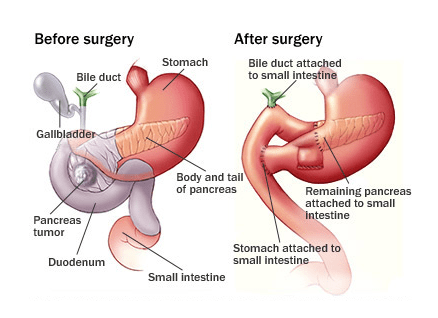
- Whipple Procedure: It is often used to remove tumors in the head of the pancreas
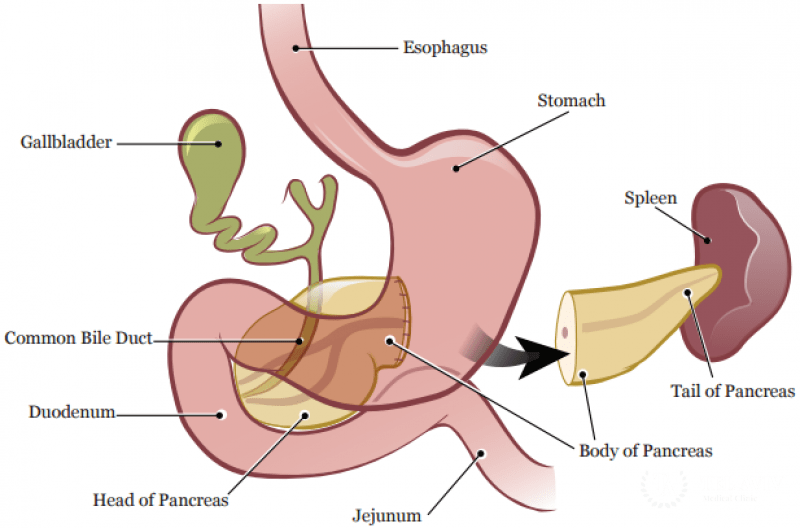
- Distal Pancreatectomy: It is often used to remove tumors in the tail of the pancreas
- Total Pancreatectomy: It is removal of the entire pancreas, and often removal of gallbladder, spleen, and other areas as deemed necessary by the surgeon.
- Central Pancreatectomy: It is removal of the middle of the pancreas
B) Borderline operable tumor:
If the tumor is partially adherent to the portal vein or close to the neighboring arteries usually few cycles of chemo or Chemo followed by radiation is given. CT scan or MR is repeated in a few weeks and the response assessed. If there is a good response or stable disease, The patient is taken for Surgery. However, if the disease progresses during this period patient is referred for palliative treatment.
C) Locally Advanced Tumor:
If a tumor is stuck to blood vessels which prevents its resection, surgery is not usually recommended because of potential complications. For many locally advanced tumors, physicians will recommend chemotherapy and radiation therapy as definitive treatment.
D) Metastatic tumors:
Palliative chemo, stenting for jaundice, duodenal Bypass for obstruction are the options. Palliative treatment options include stenting of the obstructed biliary tree (to relieve jaundice), surgical biliary bypass (especially in younger patients), and complex pain-relief options. In addition, enzyme supplements may be useful because the main pancreatic duct is usually blocked. Chemotherapy is an option and has been shown to increase the chance of survival, especially over longer periods of time. Curative treatment options include partial or total removal of the pancreas to prevent metastasis. Postoperative morbidity is high (30%–40%), and patients generally require intensive care for at least 24 hours after surgery
Laparoscopic Pancreatic Surgery in Pune:
Laparoscopic pancreatic surgery in Pune is a minimally invasive approach where the surgery is performed through small keyhole incisions instead of a large open cut. It offers several important advantages for patients:
- Significantly less post-operative pain
- Smaller scars and better cosmetic outcome
- Shorter hospital stay of 5 to 7 days compared to 10 to 14 days for open surgery
- Faster return to normal activities within 3 to 4 weeks
- Lower risk of wound infection and complications
- Less blood loss during surgery
Laparoscopic distal pancreatectomy is the most commonly performed minimally invasive pancreatic surgery. Laparoscopic Whipple surgery is also performed at select centres by highly experienced HPB surgeons. Not every patient is suitable for laparoscopic surgery. Eligibility depends on tumour size, location, and extent of blood vessel involvement.
Pancreatic Cancer Survival Rate:
Pancreatic cancer survival rate in India depends heavily on the stage at which it is detected and whether surgery is possible.
Here are the approximate survival rates by stage:
These are general statistics. Individual outcomes depend on tumour biology, patient health, surgical expertise, and post-surgical treatment.
The most important factor that improves survival is early detection and surgery by an experienced pancreatic cancer surgeon. Patients who undergo a complete R0 resection where no cancer cells are left at the surgical margins have significantly better survival outcomes.
This is why choosing the right surgeon for pancreatic cancer treatment matters enormously.
What is the cost of Pancreatic Cancer Treatment in Pune?
The cost of Pancreatic cancer treatment in Pune may depend upon the following factor
- Type of treatment recommended by Liver Cancer Surgeon
- Duration of hospitalization
- Room category
- Additional medical tests, if required
- Expense for medications
- Government Scheme (If Applicable)
Pancreatic Cancer Treatment Under Government Scheme in Pune:
Pancreatic cancer surgery is expensive. For many families in Maharashtra it is a very large financial burden.
The good news is that cancer treatment under government scheme is available at D.Y. Patil Hospital, Pimpri-Chinchwad for eligible patients. This significantly reduces the cost of pancreatic cancer surgery including Whipple surgery and distal pancreatectomy.
Dr. Manoj Dongare accepts patients under the following government health schemes:
- Mahatma Jyotiba Phule Jan Arogya Yojana (MJPJAY)
- Central Government Health Scheme (CGHS)
- Ex-Servicemen Contributory Health Scheme (ECHS)
- Maharashtra Police Kutumb Arogya Yojana (MPKAY)
- Dhanwantari Scheme Pimpri Chinchwad
Dr. Manoj Dongare’s team guides every eligible patient through the complete scheme documentation and enrollment process. Financial concerns should never delay pancreatic cancer treatment.
Why Choose Dr. Manoj Dongare as Your Pancreatic Cancer Specialist in Pune?
Here is why patients from Pune, Mumbai, Nashik, Nagpur, and rural Maharashtra trust Dr. Manoj Dongare for pancreatic cancer treatment:
- 17 years of specialised experience in HPB surgery and surgical oncology
- Over 600 pancreatic resections performed including complex portal vein resections and post chemoradiation cases
- Expert in Whipple surgery, distal pancreatectomy, total pancreatectomy, and laparoscopic pancreatic surgery in Pune
- Multidisciplinary team approach with medical oncologists, radiation oncologists, radiologists, and nutritionists
- Practices at D.Y. Patil Hospital, Pimpri-Chinchwad and Cloverleaf Speciality Clinic, Wakad, Pune
- Accepts patients under MJPJAY, CGHS, ECHS, and PMJAY government health schemes
- Available for second opinion on pancreatic cancer in Pune for patients who have been told surgery is not possible elsewhere.
Book an Appointment:
Dr. Manoj Dongare at Dr. D. Y. Patil Hospital and Research Center provides one of the best treatments for various Liver diseases in Pimpri Chinchwad Pune. For more information about our comprehensive treatment options, or to request an appointment with the best HPB and Liver Transplant surgeon in Pune call 09881379573 or Click on Book Appointment for online booking with your near hospital.
Frequently Asked Questions About Pancreatic Cancer Surgery in Pune:
Yes. Early stage pancreatic cancer detected at Stage 1 or Stage 2 where the tumour is still operable has significantly better outcomes. Surgery combined with post-operative chemotherapy gives the best chance of long-term survival. The key is not to ignore warning symptoms like jaundice, upper abdominal pain, sudden weight loss, or new-onset diabetes.
The best treatment depends on the stage and location of the tumour. For operable tumours, surgery is the most effective option. Whipple surgery is recommended for tumours in the head of the pancreas. Distal pancreatectomy is done for body and tail tumours. For advanced cases, chemotherapy and radiation are the primary treatments. Consult Dr. Manoj Dongare at D.Y. Patil Hospital, Pimpri-Chinchwad for a complete evaluation and personalised treatment plan.
Whipple surgery or pancreaticoduodenectomy is a complex surgical procedure that removes the head of the pancreas, duodenum, bile duct, and gallbladder. It is recommended for pancreatic cancer located in the head of the pancreas that has not spread to major blood vessels or distant organs. Dr. Manoj Dongare performs Whipple surgery in Pune at D.Y. Patil Hospital, Pimpri-Chinchwad with over 600 pancreatic resections of experience.
Recovery after Whipple surgery or distal pancreatectomy typically takes 6 to 8 weeks. Hospital stay is 7 to 14 days depending on the type of surgery. Laparoscopic pancreatic surgery has a faster recovery of 3 to 4 weeks. Full return to normal activities takes 6 to 8 weeks. Regular follow-up with Dr. Manoj Dongare is essential during the recovery period to monitor healing and plan further treatment if needed.
Yes. Pancreatic cancer surgery including Whipple surgery and distal pancreatectomy is available at minimum cost under the MJPJAY scheme at D.Y. Patil Hospital, Pimpri-Chinchwad, Pune. Treatment is also available under PMJAY for eligible patients from any state of India. Dr. Manoj Dongare’s team helps eligible patients complete all documentation and enrollment so that financial concerns do not delay pancreatic cancer treatment in Pune.