
HPB Surgeon in Pune:
With over 17 years of experience, Dr. Manoj Dongare is recognised as one of the best HPB Cancer Surgeons in Pune and PCMC. He specialises in complex surgeries of the liver, pancreas, and biliary system, and is widely regarded as a top cancer surgeon and best oncologist in Pune for hepato-pancreato-biliary conditions. Practising at Cloverleaf Speciality Clinic, Wakad and D.Y. Patil Hospital, Pimpri-Chinchwad, he has performed over 700 liver transplants, 600 pancreatic resections, and 400 liver resections — bringing world-class surgical care to patients across Pune, PCMC, and Maharashtra.
What is Hepato Pancreato Biliary (HPB) Surgery?
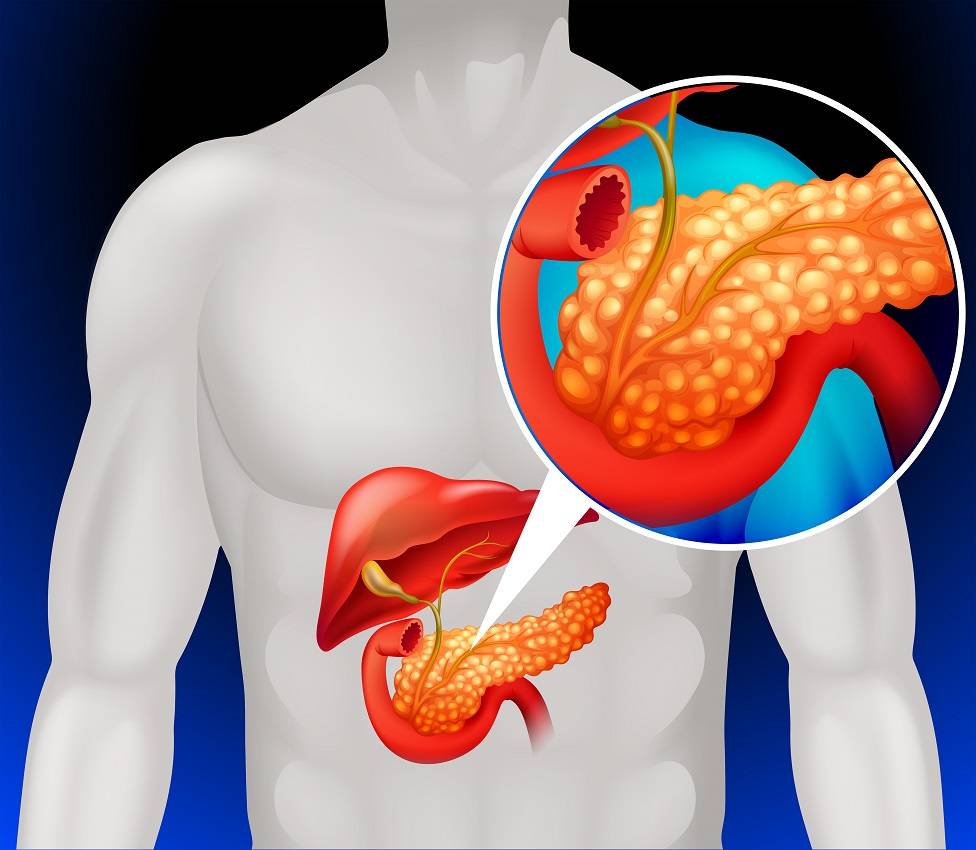
The Term “Hepato Pancreato-biliary (HPB) surgery” is a surgical treatment of diseases in the liver (hepatic), pancreas (pancreatic), and biliary system (gallbladder and bile ducts). These are among the most challenging and complex surgical procedures performed in General Surgery and require a high degree of expertise and skill like Dr. Manoj Dongare. He is one of the best HPB Surgeon in Pune.
Conditions That Require HPB Surgery:
HPB surgery is needed when a disease affects one or more organs of the hepato-pancreato-biliary system — meaning the liver, pancreas, gallbladder, or bile ducts. These conditions can be cancerous, pre-cancerous, or non-cancerous but still serious enough to need surgical treatment.
Common conditions that require HPB surgery include:
- Liver Cancer (Hepatocellular Carcinoma) – Primary cancer that starts in the liver cells
- Liver Metastasis – Cancer that has spread to the liver from another organ such as the colon or rectum.
- Pancreatic Cancer – One of the most complex cancers, requiring specialised HPB cancer surgery in PCMC, Pune.
- Bile Duct Cancer (Cholangiocarcinoma) – A rare but serious cancer of the bile ducts.
- Gallbladder Cancer – Often diagnosed late and needing extensive surgery.
- Pancreatitis (Chronic or Severe Acute) – Inflammation of the pancreas that does not respond to non-surgical treatment.
- Biliary Stricture – Narrowing of the bile duct that causes blockage and jaundice.
- Benign Liver Tumours – Some non-cancerous growths also need surgical removal.
- Cystic Tumours of the Pancreas – Fluid-filled growths that can turn cancerous if untreated.
- Gallstone Complications – Complex gallstone disease affecting the bile duct or causing repeated infections.
If you or a family member has been diagnosed with any of the above, consult an HPB cancer specialist in Pune at the earliest for proper evaluation and timely treatment.
Warning Signs You Should Not Ignore:
Many HPB conditions do not cause clear symptoms in the early stages. By the time symptoms appear, the disease may have already progressed. Knowing the warning signs can help you seek medical attention early — and early treatment always gives better results.
Visit an HPB cancer specialist in Pune if you notice:
- Jaundice – Yellowing of the skin or eyes, often the first sign of bile duct or pancreatic problems
- Unexplained weight loss – Losing weight without dieting or any clear reason
- Persistent abdominal pain – Especially in the upper right or upper middle part of the stomach
- Dark-coloured urine – Urine that looks tea or cola coloured
- Pale or white stools – A sign that bile is not reaching the digestive system properly
- Loss of appetite – Feeling full quickly or not feeling hungry at all
- Nausea and vomiting – Especially when it keeps coming back without a clear cause
- Swelling of the abdomen – Fluid build-up in the belly, also called ascites
- Fatigue – Feeling extremely tired even after rest
- New-onset diabetes in older adults – Sometimes an early indicator of pancreatic disease
Type of HPB Surgery:
- Liver Tumors: Tumors of the liver can be either primary liver cancers or liver metastases from other sites in the body. The most common tumor to metastasize to the liver is colorectal cancer.
- Pancreatic Tumors: Cancers of the pancreatic duct are the most common but patients can develop neuroendocrine tumors of the pancreas as well as cystic tumors that can either be precancerous or malignant upon presentation.
- Gall Bladder & Bile Duct Tumors: These types of cancers are relatively rare but when found can require extensive general surgery to treat.
- Pancreatitis: Pancreatitis is an inflammation of the pancreas. The condition can be acute, coming on suddenly and resolving in about a week, or it can be chronic, worsening over time and requiring long-term management.
- Gallstone disease: Gallstone disease is the most common disorder affecting the biliary system, the body’s system of transporting bile
- Liver Metastasis: Liver metastasis is a cancerous tumor that has spread to the liver from cancer that started in another place in the body. It’s also called secondary liver cancer
Laparoscopic & Minimally Invasive HPB Surgery in PCMC, Pune:
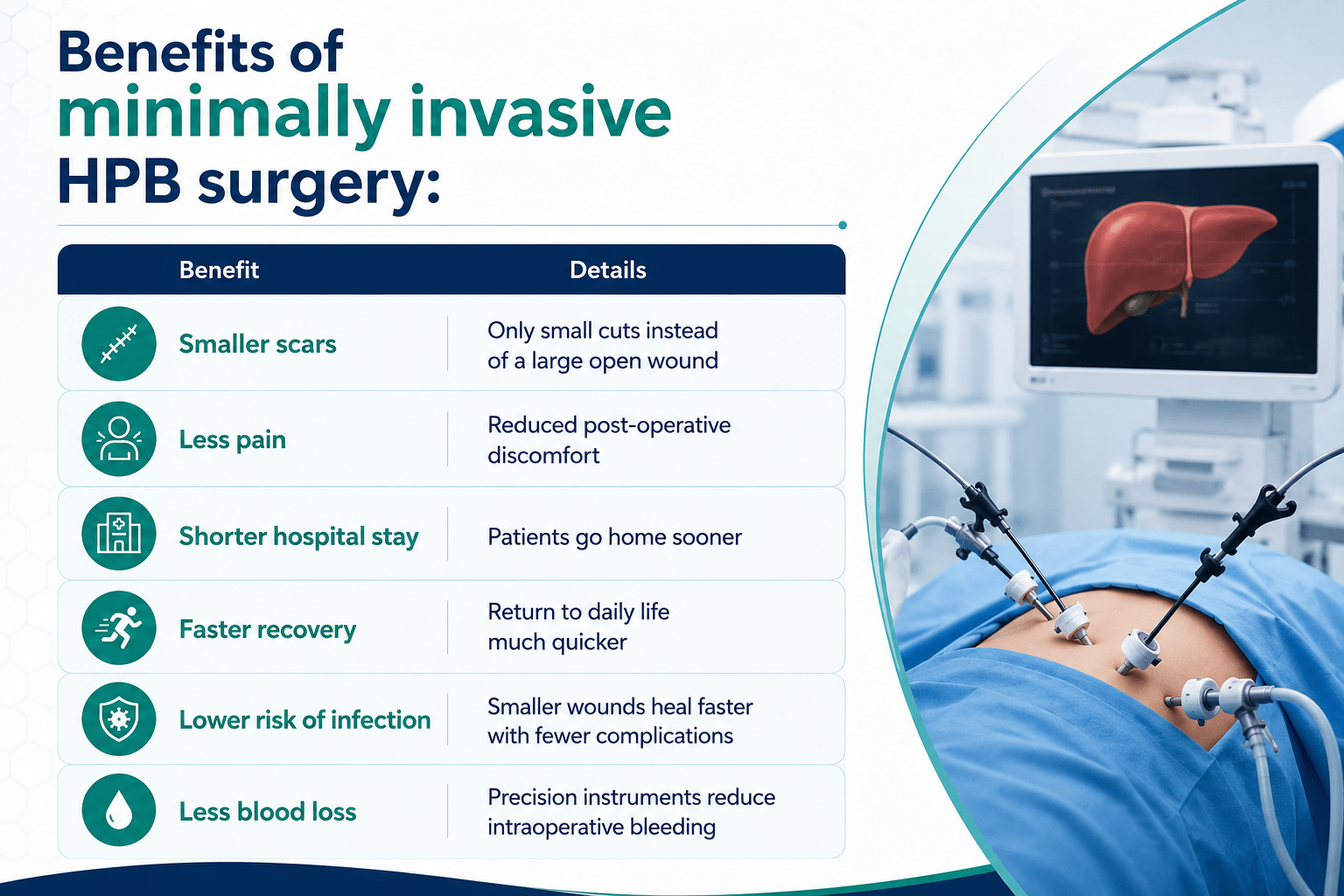
Not all HPB surgeries require large open cuts. Advances in surgical technology now allow many complex HPB procedures to be performed using laparoscopic (keyhole) or minimally invasive techniques.
What is laparoscopic HPB surgery?
In laparoscopic surgery, the surgeon makes a few small cuts (usually less than 1 cm) and inserts a thin camera and surgical instruments to perform the procedure. This is different from open surgery, where a large incision is made in the abdomen.
HPB procedures commonly done with minimally invasive techniques:
- Laparoscopic liver resection (removal of part of the liver)
- Laparoscopic cholecystectomy for complex gallbladder disease
- Minimally invasive distal pancreatectomy
- Laparoscopic surgery for biliary strictures
One of the Best HPB Surgeon in PCMC and Pune:
Dr. Manoj Dongare is one of the best HPB Surgeon in Pune and working as a Senior Consultant in HPB, Surgical Oncology, and Liver Transplantation at D.Y. Patil Hospital and Research Center, Pune. He has 17 years of experience in treating various surgical treatments and HPB surgeries. Also, He has a Special Interest in Complex HPB Surgery, Cadaveric, & Living Donar Liver Transplantation, and Surgical Oncology. Dr. Manoj Dongare worked as a Fellow in HPB and Liver Transplantation at Kings College Hospital, London for a year and then spent another year at St. James Hospital, Leeds UK. He was then selected as the EHPBA Fellow and did a 2 years Fellowship in St.Vincent’s University Hospital, Dublin Ireland.
He has been involved in over 700 liver Transplants, 600 Pancreatic Resections (including portal vein resections, Post chemoradiation), and 400 liver resections for colorectal metastasis and HCC’s, Extended hepatectomies +/- Vascular resections for cholangiocarcinomas, 2 stage hepatectomies, and ALPPS.
Hepato-Pancreato-Biliary surgeries:

Liver Cancer
Liver cancer is a type of cancer that starts in the liver. Cancer starts when cells in the body begin to grow out of control
Pancreatic Cancer
The pancreas is an organ located in the abdomen. It plays an essential role in converting the food we eat into fuel for the

Pancreatitis
Pancreatitis is an inflammation of the pancreas. The condition can be acute, coming on suddenly and resolving in about
Bile Duct Cancer
Bile duct cancer is a rare disease in which malignant cells form in the bile ducts. it is also known as cholangiocarcinoma.
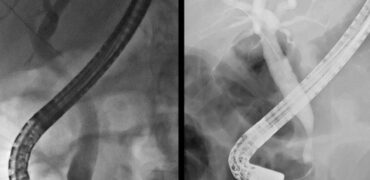
Biliary Stricture
Biliary stricture, also known as bile duct stricture, is a condition wherein the common bile duct becomes abnormally

Complex Gall Bladder
Gallbladder disease refers to any of the various medical conditions that can affect your gallbladder. The most common
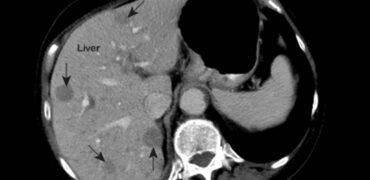
Liver Metastasis
Liver metastasis is a cancerous tumor that has spread to the liver from cancer that started in another place in the body.
HPB Surgery Procedure: What to Expect
If you or a loved one is preparing for HPB surgery, it is natural to have questions. Here is a simple step-by-step guide to help you understand the process.
Step 1 – Initial Consultation
Your surgeon will review your medical history, symptoms, and any previous reports. A physical examination is done to understand your overall condition.
Step 2 – Investigations and Imaging
You will be asked to undergo blood tests, CT scan, MRI, PET scan, or ERCP depending on your condition. These help the surgeon plan the operation precisely.
Step 3 – Pre-Surgery Preparation
You may be asked to stop certain medicines, follow a specific diet, or undergo nutritional support before surgery. For some patients, chemotherapy or radiation may be advised before the operation (neoadjuvant therapy).
Step 4 – The Surgery
Depending on the condition, the surgery can take anywhere from 4 to 12 hours. It is performed under general anaesthesia by a skilled HPB surgical team. The type of surgery — open or laparoscopic — is decided based on your case.
Step 5 – Post-Surgery Care in Hospital
After the operation, you will be monitored in the ICU or recovery ward. Pain is managed with medication. Drains may be placed temporarily to remove fluids from the surgical area.
Step 6 – Discharge and Follow-Up
Most patients are discharged within 5 to 10 days depending on the complexity of surgery. Follow-up appointments are scheduled to monitor recovery, check lab reports, and plan further treatment if required (such as chemotherapy).
Recovery After HPB Surgery:
Recovery after HPB surgery depends on the type of procedure performed, the patient’s age, and overall health. Here is a general guide to help you plan your recovery.
Typical recovery timeline:
Day 1–3: Rest in ICU or high-dependency ward. IV fluids and pain management begin.
Day 3–5: You may be encouraged to sit up and take short walks to prevent clots.
Day 5–10: Most patients are shifted to a regular room. Liquid or soft diet begins.
Week 2–4: Discharge from hospital. Light activity at home. Avoid lifting heavy objects.
Week 6–8: Most patients can resume light daily activities. Driving and office work may resume as advised.
3 Months: Full recovery for most non-complex surgeries. Follow-up scans and blood tests are done.
Diet after HPB surgery:
- Eat small, frequent meals throughout the day
- Focus on high-protein, low-fat foods
- Avoid spicy, oily, and processed foods
- Stay well hydrated — drink plenty of water
- Strictly avoid alcohol and smoking
- A dietitian referral may be given for personalised meal planning
Things to watch out for after discharge:
- Fever above 38°C
- Redness, swelling, or discharge from the wound
Severe abdominal pain - Yellowing of skin or eyes
- Inability to eat or persistent vomiting
Contact your doctor immediately if any of these occur.
HPB Cancer Surgery Cost in Pune:
The cost of HPB surgery in Pune varies depending on several factors. It is not possible to give a fixed price without a proper evaluation, but the following gives you a general idea of what affects the cost.
Factors that determine HPB surgery cost in Pune:
Type of surgery – A simple gallbladder surgery costs far less than a Whipple procedure or liver resection
Open vs laparoscopic approach – Minimally invasive surgery may have different costs depending on technology used
Hospital facilities – ICU stay, ward type (general, semi-private, private), and duration of stay
Complexity of the case – Tumour size, involvement of blood vessels, need for reconstruction
Pre-surgery investigations – Scans, biopsy, lab tests before the operation
Post-surgery care – Medicines, physiotherapy, follow-up visits, and additional treatment like chemotherapy
HPB Cancer Treatment Available Under Government Schemes:
Cost should never be a reason to delay cancer treatment. Dr. Manoj Dongare believes that every patient deserves access to quality HPB cancer care — regardless of their financial background.
At D.Y. Patil Hospital, Pimpri-Chinchwad, HPB cancer treatment is available under the following government health schemes:
- Mahatma Jyotiba Phule Jan Arogya Yojana (MJPJAY)
- Central Government Health Scheme (CGHS)
- Ex-Servicemen Contributory Health Scheme (ECHS)
- Maharashtra Police Kutumb Arogya Yojana (MPKAY)
- Dhanwantari Scheme – Pimpri Chinchwad
Under these schemes, eligible patients can receive complex HPB cancer surgeries, liver resections, and pancreatic procedures at minimal or no out-of-pocket cost.
Why choose Dr. Manoj Dongare for HPB surgery care?
Book an Appointment:
Dr. Manoj Dongare at Dr. D. Y. Patil Hospital and Research Center provides one of the best treatments for various Liver diseases in Pimpri Chinchwad Pune. For more information about our comprehensive treatment options, or to request an appointment with the best HPB and Liver Transplant surgeon in Pune call 09881379573 or Click on Book Appointment for online booking with your near hospital.
FAQ's:
HPB oncology is a specialized multidisciplinary field of medicine dealing with cancers of the Liver, Pancreas, Bile Duct & Gall Bladder.
Hepatobiliary and pancreatic (HPB) surgery is used to treat cancers and diseases of the liver, gall bladder, bile duct, and pancreas.
The HPB Surgery may take 4 to 12 hours, depending on which approach is used and the complexity of the operation
HPB Surgeon may suggest below precaution after surgery
- After undergoing the procedure, you do not require any special care.
- Consume a well-balanced, protein-rich diet.
- Cut down on excessive fats and sugar.
- Avoid alcohol, tobacco, and smoking