
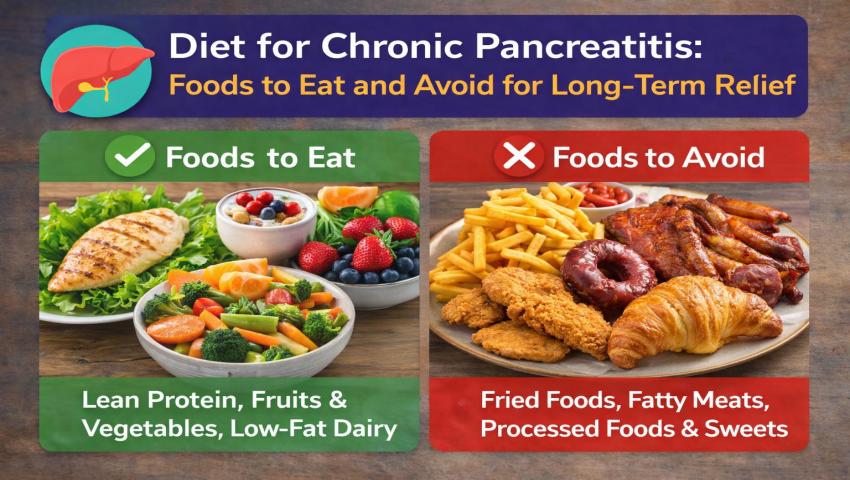
Medically reviewed by Dr. Manoj Dongare — Surgical Oncologist, HPB & Liver Transplant Surgeon, 17+ years of experience, Tata Memorial Hospital-trained.
Last Updated: [July/2026]
Have you ever wondered why some foods instantly worsen pancreatitis symptoms while others help you feel lighter and more comfortable? For people dealing with chronic pancreatitis, diet is more than just food. It is a key part of long-term healing and symptom control.
In this blog, you will learn simple, practical steps to build a chronic pancreatitis diet that truly helps. You will clearly understand what to eat in pancreatitis and pancreatitis what food to avoid for better digestion and reduced pain. Dr. Manoj Dongare, a Chronic Pancreatitis Specialist in Pune, explains what to eat, what to avoid, and how to follow an easy pancreatitis nutrition plan every day.
In this blog, we will see…
- The role of diet in chronic pancreatitis
- Foods that help and foods to avoid
- A simple daily meal plan
- Lifestyle tips for long-term relief
Pancreatitis Diet Chart: Quick Reference
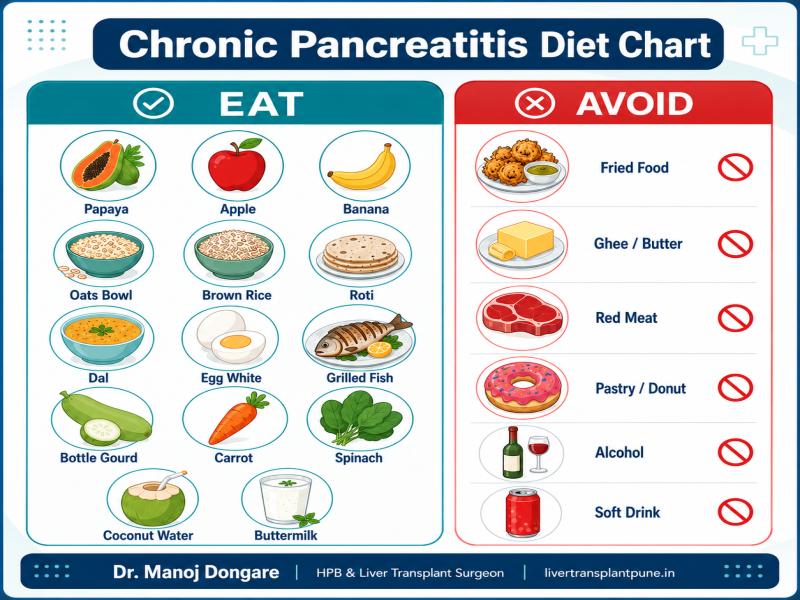
Here is a simple pancreatitis diet chart to help you decide what to eat and what to avoid at a glance:
This pancreatitis diet food list is a starting point. Your exact fat and calorie limit should always be set by your doctor based on your condition.
Why Diet Matters in Chronic Pancreatitis?
When the pancreas is inflamed for a long time, digestion becomes difficult. Fat, spices, and heavy foods put extra pressure on the pancreas, increasing pain and discomfort. Following a proper pancreatitis diet food list helps reduce this strain, supports digestion, and controls symptoms more effectively.
A correct low-fat diet for pancreatitis helps in:
- Reducing inflammation
- Preventing flare-ups
- Supporting digestion
- Improving long-term comfort
- Enhancing the results of Chronic pancreatitis treatment in Pune
Food choices can make a big difference in how your pancreas feels every single day.
7 Foods to Eat: What Helps Your Pancreas?
The goal is to eat foods that are light, easy to digest, and low in fat. These foods support digestion and reduce stress on the pancreas.
Foods good for pancreatitis:
- Fresh fruits: papaya, apple, banana, oranges
- Vegetables: bottle gourd, carrots, pumpkin, spinach
- Whole grains: oats, brown rice, wheat roti, daliya
- Lean protein: boiled chicken, egg whites, fish (grilled/steamed)
- Healthy carbs: sweet potatoes, poha, idli, upma
- Low-fat dairy: toned milk, curd, paneer in moderation
- Hydrating drinks: coconut water, lemon water (no sugar), thin buttermilk
These options work well in a pancreatitis-friendly meal plan.
For personalised dietary guidance and advanced pancreatic care, consult an experienced Pancreatic Cancer Treatment in Pune like Dr. Manoj Dongare, who offers expert management for pancreatitis and pancreatic disorders.
Common Food Questions in Pancreatitis:
- Is papaya good for pancreatitis?
Yes. Papaya is easy to digest and low in fat, making it a good fruit choice for chronic pancreatitis. - Is idli good for pancreatitis?
Yes. Idli is steamed, low in fat, and gentle on digestion, which makes it a suitable breakfast option. - Is paneer good for pancreatitis?
Only in small amounts and only low-fat paneer. Regular full-fat paneer is high in fat and can trigger symptoms. - Can I eat roti in chronic pancreatitis?
Yes. Wheat roti made without excess oil or ghee is a safe and recommended part of a pancreatitis meal plan.
9 Foods and Habits to Avoid or Limit:
Some foods are known to trigger digestive stress and flare-ups.
Foods to avoid with pancreatitis:
- Fried foods
- Ghee, butter, cheese
- Creamy curries and gravies
- Red meat
- Bakery items
- Spicy and oily snacks
- Alcohol
- Sugary drinks
- Packaged or processed foods
Avoiding these foods is a key part of pancreatitis dietary guidelines.
Pancreatic Enzymes and Vitamin Deficiency: What You Should Know
Chronic pancreatitis can reduce the pancreas’s ability to produce digestive enzymes. This is called pancreatic exocrine insufficiency, and it can lead to poor fat digestion even on a low-fat diet.
- Pancreatic Enzyme Replacement Therapy (PERT): Doctors may prescribe enzyme supplements (such as Creon) to be taken with meals. These help your body break down fat, protein, and carbohydrates properly. Never start or stop enzyme supplements without your doctor’s advice.
- Watch for vitamin deficiency: Because fat digestion is affected, chronic pancreatitis patients are at risk of low Vitamin A, D, E, and K levels. Your doctor may recommend periodic blood tests and supplements if needed.
- A note on fibre: While fibre is generally healthy, very high-fibre meals can sometimes reduce the effectiveness of digestive enzymes in chronic pancreatitis. Moderate fibre intake, spread through the day, works better than very high-fibre single meals.
For a proper evaluation of enzyme levels and nutrient deficiency, consult Dr. Manoj Dongare
7-Day Pancreatitis Meal Plan (India Style):
This 7-day meal plan gives you variety while keeping fat intake low. Portion sizes should be adjusted as per your doctor’s advice.
Eating tips remain the same: small frequent meals, avoid long gaps, chew slowly, and keep total daily fat intake within the limit set by your doctor.
Lifestyle & Long-Term Habits for Relief:
Simple habits can make your recovery smoother.
- Avoid alcohol completely
- Quit smoking
- Stay active with light walks.
- Reduce stress
- Sleep on time
- Follow regular follow-ups with Dr. Manoj Dongare.
These habits support your diet and reduce the chances of flare-ups.
Conclusion:
A proper pancreatitis nutrition plan is one of the strongest tools for long term relief. When you choose the right foods and avoid triggers, daily discomfort reduces and digestion becomes smoother. With guidance from a trusted expert like Dr. Manoj Dongare at Cloverleaf Speciality Clinic, Wakad, Pune, you can manage chronic pancreatitis more confidently and improve your overall quality of life.
FAQs About Diet for Pancreatitis:
Soft, low-fat foods such as fruits, vegetables, oats, brown rice, dal, boiled chicken, fish, idli, upma, and toned milk are ideal. These support a gentle digestive process.
Fried items, oily foods, red meat, bakery products, ghee, butter, alcohol, packaged snacks, and spicy foods commonly worsen symptoms.
Most people should keep fat intake low — usually 40–60 grams per day, depending on individual condition. Always follow your specialist’s advice.
Yes, but only low-fat dairy like toned milk, low-fat curd, or small amounts of paneer. High-fat dairy should be avoided.
A sample plan includes:
- Breakfast: oats or poha
- Lunch: roti/rice, dal, vegetables
- Snacks: fruits, roasted chana, soups
- Dinner: khichdi or dal-rice
- Hydration: coconut water, lemon water, buttermilk
- This structure supports healing and prevents flare-ups.