
If you are seeking advanced Laparoscopic Surgery in Pancreatic Cancer, Dr. Manoj Dongare offers world-class surgical expertise at the Cloverleaf Speciality Clinic. With over 17 years of experience, Dr. Manoj Dongare is a leading Best HPB Surgeon and the most trusted laparoscopic doctor and Pune cancer specialist. He specializes in minimally invasive techniques for complex cases like pancreatic adenocarcinoma, ensuring that patients receive life-saving Laparoscopic Surgery in Pancreatic Cancer with the benefit of faster recovery and reduced pain.
Introduction: What is Laparoscopic Surgery for Pancreatic Cancer?
Laparoscopic Surgery in Pancreatic Cancer is a modern, minimally invasive technique used to remove cancerous tumors from the pancreas. The word “Laparoscopic” comes from the Greek words lapara (flank/side) and skopeo (to view).
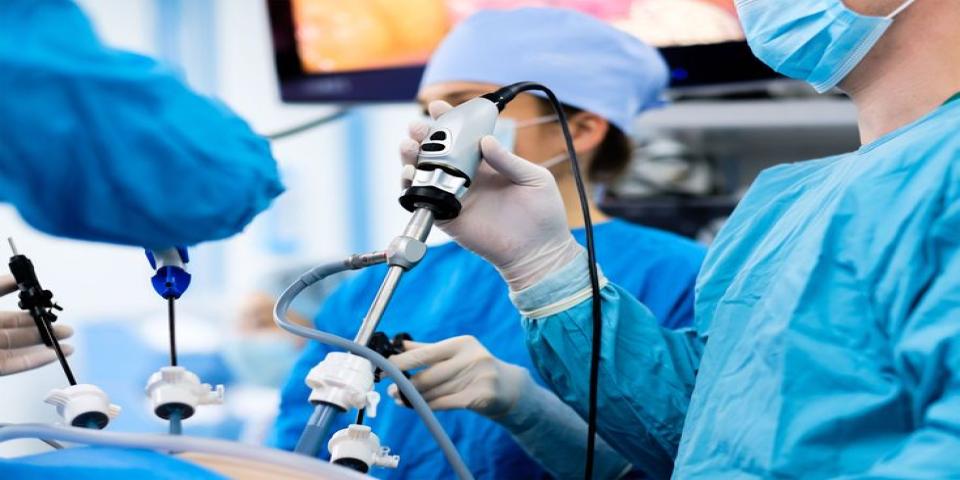
In this procedure, a Laparoscope—a thin tube with a high-intensity light and a high-resolution camera—is inserted through small “keyhole” incisions in the abdomen. This allows Dr. Manoj Dongare, the best laparoscopic surgeon in Pune, to view the internal organs on a monitor and perform precise surgery without making a large abdominal cut.
Understanding the Condition: Pancreatic Adenocarcinoma & Staging
Pancreatic adenocarcinoma: is the most common type of pancreatic cancer, starting in the ducts that carry digestive juices. Because the pancreas is located deep in the abdomen, early detection is challenging.
Pancreatic Tumor Staging: Before deciding on Laparoscopic Surgery in Pancreatic Cancer, Dr. Manoj Dongare performs pancreatic tumor staging to determine the extent of the disease:
- Stage 1 & 2: The tumor is localized or has spread only to nearby lymph nodes. These are often the best candidates for key hole surgery for pancreatic cancer.
- Stage 3: The cancer has involved major blood vessels.
- Stage 4 Pancreatic Cancer: The cancer has spread to distant organs (metastasis). At this stage, surgery is usually palliative rather than curative.
When is Keyhole Surgery for Pancreatic Cancer Recommended?
Not every patient is a candidate for a laparoscopic approach. Dr. Manoj Dongare recommends pancreatic laparoscopic surgery primarily when:
- The tumor is found in the carcinoma head of pancreas or the tail/body and is caught in early stages.
- The tumor has not invaded major surrounding blood vessels.
- The patient is fit enough to undergo general anesthesia and a minimally invasive procedure.
Benefits of Laparoscopic Pancreatic Surgery:
Choosing Laparoscopic Surgery in Pancreatic Cancer over traditional open surgery offers several life-changing advantages:
- Smaller Incisions: Instead of a 6–10 inch scar, patients have tiny “keyhole” marks.
- Reduced Blood Loss: High-definition cameras allow for extreme precision, minimizing intraoperative bleeding.
- Minimal Pain: Less tissue trauma means fewer pancreatic cancer medicines are needed for pain management.
- Faster Recovery: Patients can often start walking and eating sooner than with open surgery.
- Lower Infection Risk: Smaller wounds are less likely to develop complications.
Types of Pancreatic Surgery: Common Procedures
There are different types of pancreatic surgery depending on where the tumor is located:
- Laparoscopic Whipple Procedure: Used for carcinoma head of pancreas. It involves removing the head of the pancreas, part of the small intestine, and the gallbladder.
- Laparoscopic Distal Pancreatectomy: Performed when the tumor is in the body or tail of the pancreas. Often, the spleen is also removed.
- Total Pancreatectomy: Removal of the entire organ if the cancer is widespread within the pancreas.
The Procedure: What Happens During Surgery?
During Laparoscopic Surgery in Pancreatic Cancer, Dr. Manoj Dongare follows a meticulous process:
- Anesthesia: The patient is put under general anesthesia.
- Incisions: 4 to 5 small incisions (0.5 to 1 cm) are made in the abdomen.
- Inflation: Carbon dioxide gas is used to inflate the abdomen, creating space for the surgeon to work.
- Resection: Using the Laparoscope for guidance, the cancerous portion of the pancreas is carefully detached and removed through one of the slightly enlarged incisions.
- Reconstruction: If a Whipple procedure is done, the remaining intestine and bile ducts are reconnected.
Recovery: Laparoscopic Pancreas Surgery Recovery Time
The laparoscopic pancreas surgery recovery time is significantly shorter than traditional methods.
- Hospital Stay: Usually 5 to 7 days (compared to 10–14 days for open surgery).
- Mobilization: Most patients are encouraged to sit up and walk within 24–48 hours.
- Diet: Patients gradually move from liquids to soft foods within a few days.
- Full Recovery: Most individuals return to their normal routine within 4 to 6 weeks.
Risks, Complications, and Survival Rates:
While safer, pancreatic cancer surgery complications can still occur, including:
- Pancreatic Leak: Digestive juices leaking from the surgical site.
- Delayed Gastric Emptying: Temporary difficulty in moving food from the stomach.
- Infection or Bleeding.
Pancreatic Cancer Surgery Survival Rates:
The pancreatic cancer survival rate has improved with early intervention and better surgical techniques. For localized tumors removed by an expert like Dr. Manoj Dongare, the 5-year pancreatic cancer survival rates are much higher than for advanced stages. While a total pancreatic cancer cure is difficult, surgery offers the best chance at long-term remission.
Why Choose Dr. Manoj Dongare for Laparoscopic Pancreatic Surgery in Pune?
If you are looking for the Best cancer specialist in Pune, Dr. Manoj Dongare is the preferred choice for many reasons:
- Tata Memorial Trained: He carries the prestige and rigorous training of India’s top cancer institute.
- Super-Specialized: He is one of the few Best HPB Surgeons in India with a dedicated focus on the liver and pancreas.
- Expert in Minimally Invasive Care: As the best laparoscopic surgeon in Pune, he has performed hundreds of successful “keyhole” surgeries.
- Ethical & Transparent: Practicing at Cloverleaf Speciality Clinic, Wakad he provides honest guidance on whether surgery or palliative pancreatic cancer medicines are the right path for you.
Conclusion:
Laparoscopic Surgery in Pancreatic Cancer has revolutionized how we treat this aggressive disease. It offers hope to patients by providing a surgical option that is less taxing on the body without compromising oncological outcomes. If you or a loved one is dealing with a pancreatic diagnosis, early consultation with a specialist is vital.
Dr. Manoj Dongare is dedicated to bringing the latest international surgical standards to Pune, ensuring that every patient has the best possible shot at a healthy future. To discuss advanced treatment options, you can book an appointment with best Oncosurgeon in Pune by visiting our clinic or Call +91 9881379573 for immediate assistance.
FAQs About Laparoscopic Surgery in Pancreatic Cancer:
If detected at an early stage (Stage 1 or 2), surgery offers the best chance for a pancreatic cancer cure. However, it is often followed by chemotherapy to ensure no microscopic cells remain.
Open surgery uses one large incision, while laparoscopy uses 4-5 tiny holes. Laparoscopy results in less pain and a faster laparoscopic pancreas surgery recovery time.
In the hands of an expert like Dr. Manoj Dongare, the success rate is high, though it remains a complex operation. The pancreatic cancer surgery survival rates depend heavily on the stage of the tumor at the time of surgery.
Usually, Stage 4 pancreatic cancer is treated with chemotherapy and pancreatic cancer medicines. Surgery is only done in Stage 4 to relieve symptoms like blockages (palliative surgery).
The cost varies based on the hospital and the complexity of the case. Dr. Manoj Dongare provides consultations at Cloverleaf Speciality Clinic and performs surgeries at reputed hospitals with transparent billing.